5 Ways to Make Your Coffee Habit Actually Work For Your Energy Instead of Against It
Quick Answer: The same amount of coffee can either steady your energy or wreck it, depending on timing, what’s in your stomach, and how close it is to your natural cortisol peak. These 5 adjustments work with your existing habit, not against it.
You don’t need to quit coffee to fix how it makes you feel. Most of the crash-and-jitter cycle comes from when and how it’s consumed, not from caffeine being inherently unstable. Here are 5 changes worth trying, one at a time.

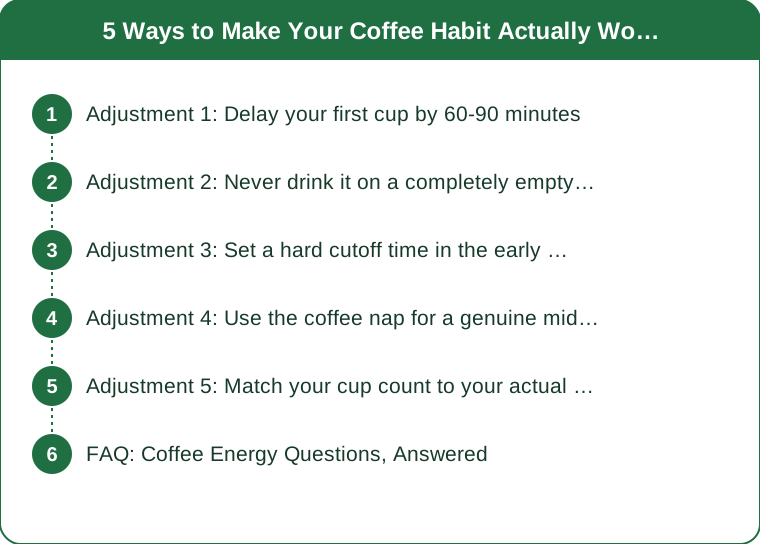
Adjustment 1: Delay your first cup by 60-90 minutes
Cortisol, your natural alertness hormone, peaks shortly after waking. Coffee right at wake-up competes with a hormone that’s already doing the job, which is part of why the first cup sometimes doesn’t feel as effective as it should.
Waiting until cortisol naturally dips — usually 60-90 minutes after waking — means caffeine has less competition and often produces a steadier, more noticeable effect for the same cup.
Adjustment 2: Never drink it on a completely empty stomach
Coffee on an empty stomach hits faster and harder, which sounds good but often means a sharper spike followed by a sharper crash 2-3 hours later. Pairing it with even a small amount of food slows absorption slightly and smooths the curve.
This doesn’t need to be a full meal — a piece of toast or a handful of nuts alongside your cup is enough to notice a difference in how even the energy feels.
Adjustment 3: Set a hard cutoff time in the early afternoon
Caffeine has a half-life of roughly 5-6 hours, meaning a 3pm coffee still has a meaningful amount in your system at 9pm. That residual caffeine can quietly reduce sleep quality even if you fall asleep fine — and poor sleep is one of the biggest drivers of needing more coffee the next day.
A cutoff around 1-2pm for most people protects sleep without requiring you to cut your total daily intake.

Adjustment 4: Use the coffee nap for a genuine midday reset
Drink a cup of coffee, then immediately lie down for a 15-20 minute nap. Caffeine takes about 20 minutes to kick in, so you wake up right as it starts working — combining the restorative effect of a short nap with the alertness boost of caffeine, rather than getting either alone.
This works best set with an alarm; napping past 20-25 minutes risks grogginess from deeper sleep stages that undoes the benefit.
Adjustment 5: Match your cup count to your actual tolerance, not habit
Tolerance builds with consistent daily intake, meaning your third cup may be doing far less than your first one did — you’re drinking out of habit, not because it’s still producing a real effect.
An occasional 1-2 week reduction (not necessarily full elimination) resets sensitivity for some people, meaning the same 1-2 cups afterward feel more effective than the 3-4 cups did before.
FAQ: Coffee Energy Questions, Answered
Does the type of coffee (drip vs. espresso vs. cold brew) change how it affects energy?
Mainly through caffeine concentration and volume rather than the brew method itself — cold brew is often higher in caffeine per ounce, so the same ‘one cup’ can deliver meaningfully more.
Is it better to drink coffee before or after breakfast?
With or right after breakfast tends to smooth the caffeine curve better than before, since food is already in your stomach slowing absorption.
How long does a caffeine crash actually last?
Most crashes resolve within 30-60 minutes as blood sugar and adrenaline stabilize — if it’s lasting much longer, the cutoff timing and food-pairing adjustments above are worth trying first.
TL;DR:
- Delay your first cup 60-90 minutes past waking to avoid competing with natural cortisol
- Never drink it fully empty-stomach; pair with a small amount of food
- Set an early-afternoon cutoff to protect sleep, which reduces next-day caffeine need
- Try the 20-minute coffee nap for a genuine midday reset
None of these require giving up coffee — they just change when and how you’re already drinking it.
Keep Reading
This article is for general informational purposes only and is not medical advice. Always consult a qualified health professional for guidance specific to you.