5 Ways Your Coffee Habit Quietly Shifts in Early Autumn
Quick Answer: Coffee intake reliably rises in early autumn for three reasons: hot drinks become appealing again, schedules get busier, and reduced morning light makes people feel less alert. The problem is that the extra cups tend to arrive later in the day, where caffeine’s five-to-six-hour half-life puts them into your sleep window. Track when rather than how much - the timing shift causes more trouble than the volume.
You didn’t decide to drink more coffee. It just happened, somewhere between the second week of school and the first cool morning.
Here are the five shifts, each with something practical attached.

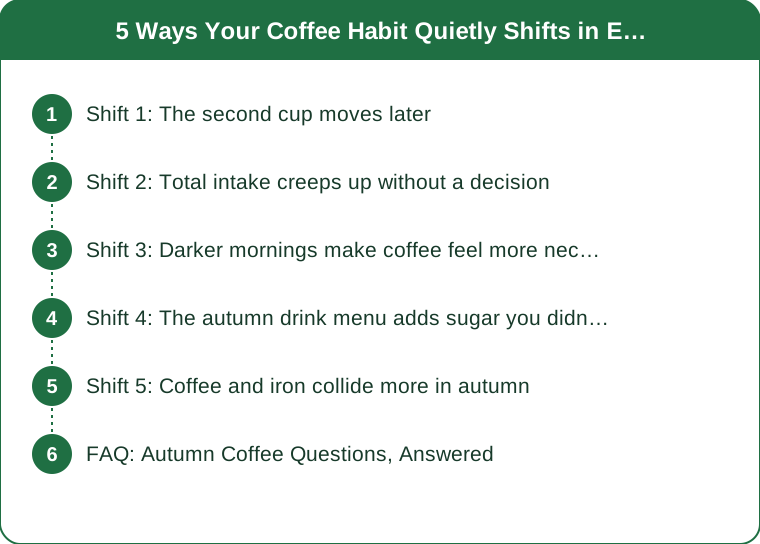
Shift 1: The second cup moves later
What happens: in summer, coffee tends to cluster in the morning - it’s too hot for a 3pm latte. As it cools, the afternoon hot drink returns, and that’s a genuinely different thing from an extra morning cup.
Why it matters: caffeine has a half-life of roughly five to six hours in most adults, meaning half of a 3pm coffee is still circulating at around 9pm, and a quarter at 2am. Individual variation is large - genetics, medications, and hormonal contraceptives all affect metabolism, and some people clear it considerably more slowly.
The effect isn’t necessarily that you can’t fall asleep. Caffeine reduces deep sleep even when sleep onset feels normal - which is why people insist coffee doesn’t affect them and still wake unrefreshed.
The fix: set a cut-off time rather than a cup limit. Roughly eight hours before bed is a reasonable default - so 2pm for an 10pm bedtime. If you want an afternoon hot drink, that’s what decaf and herbal tea are for, and the ritual is most of the appeal anyway.
Worth knowing: decaf isn’t caffeine-free but contains a small fraction of the amount - low enough not to matter for most people at a normal cup size.
Shift 2: Total intake creeps up without a decision
What happens: an extra cup appears in the routine and stays. Busier schedules, more meetings, colder mornings, and coffee as a warm-up all push volume up without anyone deciding to drink more.
Why it matters: tolerance develops. Adenosine receptors upregulate in response to regular caffeine, which means the same dose produces less alertness over time - and the natural response is another cup, which raises the baseline again.
The tell: needing coffee to feel normal rather than to feel better. Morning headaches before the first cup are a withdrawal signal, not a caffeine deficiency.
Where the ceiling sits: up to about 400mg a day is generally considered acceptable for most healthy adults - roughly four 8oz brewed coffees, though a large coffee shop drink can be 150-300mg on its own. Pregnancy guidance is substantially lower, and anyone with heart, anxiety, or sleep conditions should follow their own doctor’s advice.
The fix: count for three days without changing anything, including the sources people forget - tea, energy drinks, pre-workout, chocolate, some medications. Most people are surprised in one direction or the other, and knowing the number is most of the work.
If you want to reduce: cut by roughly one cup a week rather than abruptly. Sudden cessation produces headache, fatigue and irritability for several days, which is why most attempts fail by day two.
Shift 3: Darker mornings make coffee feel more necessary
What happens: sunrise moves later through September and October, and morning grogginess increases as morning light decreases. Coffee gets recruited to fill the gap.
Why it matters: caffeine blocks the perception of tiredness; it doesn’t address the cause, which in this case is a circadian signal that hasn’t arrived. Using coffee to substitute for morning light works short term and tends to push intake steadily upward as mornings keep getting darker.
The more effective intervention: 10-20 minutes of outdoor light within an hour of waking. It directly addresses the mechanism - light is the primary signal that advances the body clock and suppresses residual melatonin.
A specific and slightly annoying tip that works: delaying the first coffee by 60-90 minutes after waking. Cortisol naturally peaks shortly after waking, and caffeine taken during that peak adds less than it does later - many people find the same cup produces more noticeable alertness when it’s slightly delayed, and afternoon energy is steadier.
The realistic version: light first, coffee second, ideally with a gap. Coffee outside on a step is the version that requires no additional time, and it does both at once.
Worth naming: if darker mornings are producing genuinely low mood and energy rather than just grogginess, that’s a different issue - and light exposure, regular schedules, and a conversation with a doctor are more relevant than caffeine strategy.

Shift 4: The autumn drink menu adds sugar you didn’t count
What happens: seasonal flavoured drinks arrive, and a flavoured latte can carry a substantial amount of added sugar - often more than a dessert - alongside the caffeine.
Why it matters: it’s not a moral issue, it’s a mismatch issue. A drink you’re treating as coffee is functioning as a snack, which affects appetite, energy stability, and the mid-afternoon crash people then blame on the caffeine.
The crash mechanism: a large dose of liquid sugar produces a rapid blood glucose rise and fall. The subsequent dip feels like tiredness, which gets treated with more coffee - which is a genuinely circular problem.
The fix isn’t abstinence: it’s knowing which drink is which. Have the seasonal drink as a deliberate treat rather than as your default daily coffee, and if you’re having one daily, ask for fewer syrup pumps - most shops default to more than the taste requires.
Practical swaps that keep the autumn feel:
- Cinnamon on top instead of syrup inside - the flavour association does most of the work
- A smaller size of the real thing beats a large version of a diluted one
- Adding milk rather than sweetener slows absorption and increases satiety
And a note on the coffee itself: black coffee has negligible calories, so essentially all of the nutritional discussion is about what gets added.
Shift 5: Coffee and iron collide more in autumn
What happens: compounds in coffee and tea significantly reduce absorption of non-heme iron - the type in plant foods, fortified cereals and supplements. As breakfast shifts toward oats, toast and cereal in cooler weather, more of the meal’s iron becomes the type coffee interferes with.
Why it matters: low iron is common, particularly in menstruating women, and it produces fatigue, poor exercise tolerance, and hair shedding - all of which are easy to attribute to a busy autumn.
The size of the effect is meaningful. Drinking coffee with an iron-containing meal can reduce absorption of that meal’s non-heme iron substantially.
The fix is timing, not elimination:
- Leave roughly an hour between an iron-rich meal or supplement and coffee
- Vitamin C markedly increases non-heme iron absorption - orange juice or fruit with breakfast helps considerably
- If you take an iron supplement, take it away from coffee, tea and dairy
Who should care most: anyone with known low ferritin, vegetarians and vegans, menstruating women, and endurance athletes. For everyone else it’s a minor optimisation rather than a concern.
If you’re tired despite adequate sleep this autumn, ferritin is worth asking about - and it’s frequently not included in a standard panel unless requested.
FAQ: Autumn Coffee Questions, Answered
How much coffee is too much?
Up to about 400mg of caffeine daily is generally considered acceptable for most healthy adults - roughly four brewed cups, though large coffee shop drinks can carry far more per serving. Pregnancy guidance is much lower, and individual tolerance varies widely.
Does coffee actually dehydrate you?
Not meaningfully at habitual intakes. The mild diuretic effect is offset by the fluid in the drink itself. Coffee counts toward daily fluid intake for regular drinkers.
Should I take a tolerance break?
If coffee no longer produces noticeable alertness and you’re needing it to feel normal, a reduction can help. Taper over two to three weeks rather than stopping abruptly - withdrawal headaches are the main reason people abandon the attempt.
Is coffee before a workout worth it?
Caffeine is one of the better-evidenced performance aids, typically taken 30-60 minutes beforehand. The caveat is timing - a pre-workout coffee at 6pm has the same sleep implications as any other late caffeine.
Does the brewing method change caffeine content?
Substantially. Cold brew concentrate is typically high, espresso is concentrated per ounce but small per serving, and drip sits in between. The most useful comparison is per drink rather than per ounce, since that’s what you actually consume.
TL;DR:
- The afternoon hot drink returns in autumn, and a 3pm coffee is still half-present at 9pm
- Set a cut-off time - roughly eight hours before bed - rather than a cup limit
- Intake creeps up without a decision; count for three days including tea, energy drinks and pre-workout
- Darker mornings are a light problem, not a caffeine problem: 10-20 minutes outdoors beats an extra cup
- Seasonal flavoured drinks are snacks in a cup - fine as a treat, expensive as a default
- Coffee blocks non-heme iron absorption; leave an hour around iron-rich breakfasts
Watch when, not how much. The timing shift is what actually costs you.
Keep Reading
This article is for general informational purposes only and is not medical advice. Always consult a qualified health professional for guidance specific to you.