Coffee Before a Workout: The Timing That Actually Works
Quick Answer: Drink your coffee 30 to 60 minutes before training - caffeine peaks in the blood around then - at a dose of roughly one to two cups for most people. It reliably lowers perceived effort and improves endurance, with smaller benefits for strength. The two big mistakes are doubling the dose for double the effect, which mostly buys jitters, and afternoon timing that quietly taxes that night’s sleep - caffeine’s half-life means a 3pm cup is still half with you at 9pm.
Most people treat pre-gym coffee as a vibe. It is actually one of the most-studied performance substances in sports science, with decades of trials behind it - which means the questions that matter, how much and when, have real answers. Here they are, minus the lab coat.

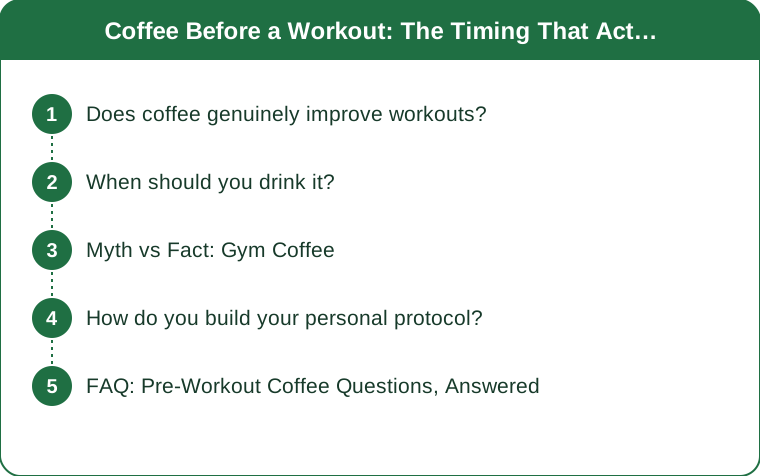
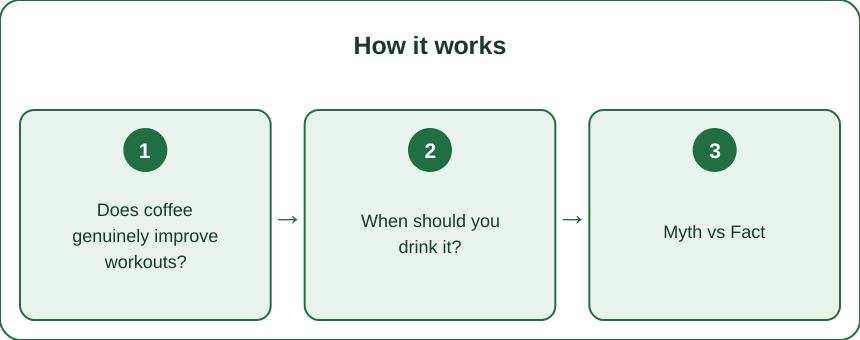
Does coffee genuinely improve workouts?
Yes - with an evidence base most supplements would kill for, and a few honest asterisks.
The headline effect is on effort. Caffeine blocks adenosine, the brain chemical that accumulates as fatigue signal - so the same pace, the same set, the same interval simply feels easier. Reviews of hundreds of trials consistently find improved endurance performance and reduced perceived exertion, which is why caffeine appears in essentially every sports nutrition guideline as one of the handful of aids with strong support.
Strength and power get smaller but real bumps. Research tends to show modest improvements in muscular endurance - a rep or two more near your limit - and small effects on maximal strength. Meaningful over months, not dramatic on any single Tuesday.
The research dose is bigger than a splash. Studies typically use around 3 to 6 milligrams per kilogram of bodyweight - for a 150-pound person, roughly 200 to 400 milligrams, where a standard 8-ounce drip coffee runs about 90 to 100. Practical translation: one large or two regular cups sits at the useful end for most people, and going beyond that adds side effects faster than performance.
And genetics deal different hands. People metabolize caffeine at genuinely different speeds - the same cup that sharpens one person makes another jittery and shaky-handed under a barbell. Habitual intake also blunts some of the edge. Your working dose is discovered, not assigned - which is what the protocol section is for.
When should you drink it?
Timing is where good coffee plans die, so anchor these numbers.
Blood levels peak around 30 to 60 minutes after drinking. Finish the cup about 45 minutes before the hard part of the session and the peak lands on your working sets or your tempo miles, not on your warm-up. Espresso drinkers on the way to the gym are, accidentally, doing it about right.
Empty versus full stomach is a comfort call. Caffeine absorbs faster on an empty stomach but hits sensitive stomachs harder - and coffee’s famous effect on digestion is a real pre-run consideration. If runs and coffee have ever conspired against you, give the cup a full hour plus a small carb bite, and let the bathroom stop happen at home.
Morning trainers: just drink it. The popular advice to delay caffeine 90 minutes after waking is a general-wellness idea, not a training one - if your workout is at 6:30am, waiting defeats the entire purpose. Coffee first, train at the peak, no ceremony required.
Afternoon and evening trainers face the real trade. Caffeine’s half-life averages around five to six hours - a 4pm cup means half the dose is still circulating at 9 or 10pm, and sleep research shows caffeine even six hours before bed measurably degrades sleep. Since sleep is worth more to your training than any pre-workout buzz, the working rule is a personal caffeine curfew roughly eight hours before bedtime. Evening sessions run on an earlier cup, a lower dose, or enthusiasm alone - and honestly, habit carries evening workouts better than people expect.
Long endurance days are the exception: for multi-hour efforts, athletes often split the dose - part before, part mid-session - rather than front-loading it all.

Myth vs Fact: Gym Coffee
Myth: Coffee dehydrates you, so it is risky before exercise. Fact: The diuretic effect of moderate coffee is mild, mostly disappears in regular drinkers, and the fluid in the cup counts toward your day. Normal hydration habits absorb it completely.
Myth: More caffeine, more performance. Fact: The dose-response curve bends fast. Past the moderate range, trials show side effects - jitters, racing heart, anxiety, worse fine motor control - without matching performance gains. A shaky bar path is not a performance enhancement.
Myth: Pre-workout powders beat coffee. Fact: The evidence-backed ingredient in most tubs is the same caffeine, sometimes at eyebrow-raising doses, plus tingles and marketing. Coffee delivers the proven compound with known dosing for pennies. Powders win only on convenience and flavor preference.
Myth: Coffee on an empty stomach burns meaningfully more fat. Fact: Caffeine nudges fat mobilization, and fasted cardio shifts fuel use during the session - but controlled research keeps finding that body-fat outcomes track total intake and training over time, not the breakfast order of operations. Train fed or fasted by comfort, not by fat-burning folklore.
Myth: You must cycle off caffeine or it stops working. Fact: Tolerance blunts some effects but a meaningful benefit persists in habitual users. A voluntary low-caffeine week before a big event may sharpen the edge - a nice-to-have, not a requirement.
How do you build your personal protocol?
Four steps, two weeks, one notebook.
Step one: establish your dose. Start at one regular cup - around 100 milligrams - taken 45 minutes before a familiar session. Note effort, focus, and any jitters. If it felt like nothing over three sessions, step up toward two cups. The right dose sharpens without side effects; the wrong one announces itself in your hands.
Step two: test on ordinary days only. Never debut a bigger dose on a race day, a max attempt, or a hard class - the day that matters is the day for your proven routine, bathroom rhythm included.
Step three: place the curfew. Count back about eight hours from your realistic bedtime; that is your last-caffeine hour, training or not. Evening exercisers structurally cannot have both a 5pm coffee and a good night - decide which one the goal needs. Decaf, for the record, delivers the ritual with a tenth of the caffeine and works surprisingly well as an evening placeholder.
Step four: mind the interactions. Espresso drinks vary wildly in actual caffeine; cold brew often runs strong; a latte’s milk slows the hit slightly. None of it breaks the plan - it just means consistency of source matters while you calibrate.
Who should sit this out or ask first: anyone pregnant or nursing has separate caffeine limits to follow; anyone with an anxiety disorder, heart rhythm issues, uncontrolled blood pressure, or reflux that hates coffee should shape this with their clinician rather than a blog. And if a workout ever brings chest pain or palpitations, that is a doctor conversation regardless of what was in the cup. This is general information, not medical advice.
FAQ: Pre-Workout Coffee Questions, Answered
How long before a workout should I drink coffee?
Finish it 30 to 60 minutes before the hard work - blood caffeine peaks in that window. For runs on a sensitive stomach, stretch it to a full hour with a small bite of food.
How much coffee is enough for performance?
One to two regular cups covers the useful range for most people - roughly aligned with the researched doses once bodyweight is considered. More than that tends to add jitters, not results.
Will afternoon coffee before the gym ruin my sleep?
Quite possibly - half of a 3pm dose is still active around 9pm, and caffeine six hours before bed measurably damages sleep. Set a caffeine curfew about eight hours before bedtime and let evening workouts run without it.
Is coffee as good as pre-workout supplements?
For the evidence-backed part, essentially yes - caffeine is the engine of most formulas. Coffee offers known dosing, lower cost, and no mystery blend; powders offer convenience and flavor. Performance-wise it is the same molecule.
TL;DR:
- Caffeine is the best-evidenced legal performance aid: effort drops, endurance rises, strength gets a small bump.
- Time the cup 30 to 60 minutes before the hard part; one to two cups is the working dose for most.
- The curfew matters more than the boost: no caffeine within about eight hours of bedtime, even on training days.
- Calibrate on ordinary days, never race days - and coffee matches pre-workout powder at a fraction of the cost.
The diner has been selling a sports supplement all along. Dose it like one, clock it like one, and it pays you twice - at the gym and, left alone after lunch, again at midnight.
Keep Reading
This article is for general informational purposes only and is not medical advice. Always consult a qualified health professional for guidance specific to you.