Does the 'Coffee Nap' Actually Work Better Than Coffee or a Nap Alone?
Quick Answer: Yes — drinking coffee immediately before a short 15-20 minute nap can outperform either strategy alone, because caffeine takes about 20 minutes to take effect, which lines up almost exactly with waking from a short nap that clears adenosine (the sleep-pressure chemical) caffeine also blocks.
You’ve heard of the coffee nap and it sounds like it shouldn’t work — drinking something meant to keep you awake right before trying to sleep. The timing overlap is actually the entire mechanism, and it’s more legitimate than it sounds.

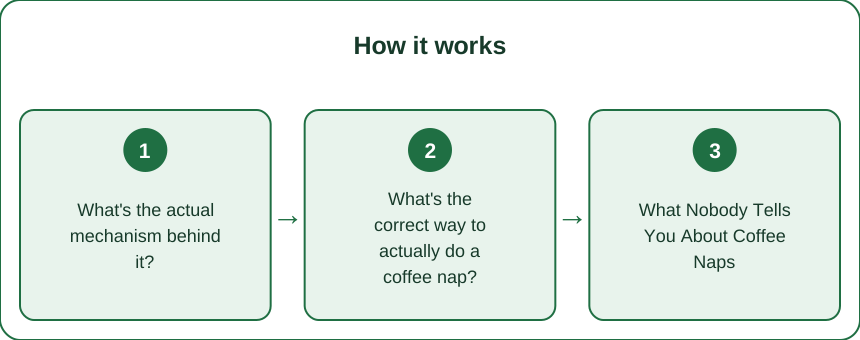
What’s the actual mechanism behind it?
Caffeine works by blocking adenosine receptors — adenosine is a chemical that builds up in your brain throughout the day and creates the feeling of sleepiness. Caffeine doesn’t remove adenosine, it just blocks your brain from sensing it.
A short nap, meanwhile, actually clears some accumulated adenosine from your system directly. Timed together, the nap does the clearing while the caffeine — which takes about 20 minutes to fully kick in — arrives just as you wake up to block whatever adenosine remains, compounding the alertness effect of each individually.
What’s the correct way to actually do a coffee nap?
Drink coffee quickly (not sipped slowly over 20 minutes), then immediately lie down for a 15-20 minute nap, setting an alarm.
The timing window matters — a nap longer than 20-25 minutes risks entering deeper sleep stages, which causes grogginess (sleep inertia) upon waking that can outweigh the benefit, even with caffeine’s timing working in your favor.

What Nobody Tells You About Coffee Naps
Falling asleep isn’t strictly required for the benefit — even lying down with eyes closed for the same window, without fully falling asleep, provides some rest benefit combined with the caffeine timing, though actual sleep produces a stronger effect.
Also underrated: this doesn’t substitute for actual nighttime sleep debt — a coffee nap is a short-term alertness tool for a temporary afternoon slump, not a fix for chronic sleep deprivation, which needs real sleep, not a caffeine timing trick.
Who should be cautious with this strategy?
Anyone caffeine-sensitive or prone to anxiety with stimulants should be cautious — the combined alertness hit can feel more intense than a regular cup of coffee.
Avoid doing this too late in the day — even with the nap, caffeine’s full duration (several hours) can still interfere with nighttime sleep if timed too close to bedtime, undermining the exact sleep debt a coffee nap is meant to help you avoid accumulating.
FAQ: Coffee Nap Questions, Answered
Does the type of caffeine matter — coffee versus tea or a caffeine pill?
Not significantly — any reasonably fast-absorbing caffeine source works with the same timing logic; coffee is just the most common and convenient option.
What if I can’t fall asleep within a few minutes of lying down?
That’s fine — even resting with eyes closed for the window still provides some benefit, and forcing sleep isn’t necessary for the strategy to help somewhat.
Is a coffee nap better than just a longer nap without caffeine?
For a short afternoon alertness boost, research suggests the combination often outperforms either strategy alone — though a longer, uninterrupted nap serves a different purpose (deeper rest) than this quick-alertness technique.
TL;DR:
- Coffee naps work because caffeine’s ~20 minute onset lines up with waking from a short nap
- A short nap clears some adenosine directly while caffeine blocks the rest upon waking
- Keep the nap to 15-20 minutes to avoid grogginess from deeper sleep stages
- This is a short-term alertness tool, not a substitute for real nighttime sleep debt
The timing overlap, not a gimmick, is what makes this combination genuinely work.
Keep Reading
This article is for general informational purposes only and is not medical advice. Always consult a qualified health professional for guidance specific to you.