Coffee Timing: When to Drink It for Maximum Effect (and Minimum Regret)
Coffee advice ranges from ‘delay 90 minutes after waking’ to ‘never after noon’ — rules that sound scientific and deserve inspection. The timing guide: what the cortisol-delay theory actually holds, the cutoff math that protects sleep and the strategic-caffeine playbook.

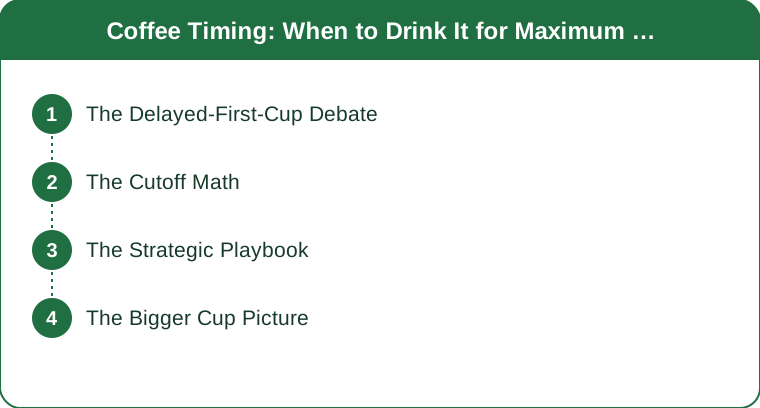
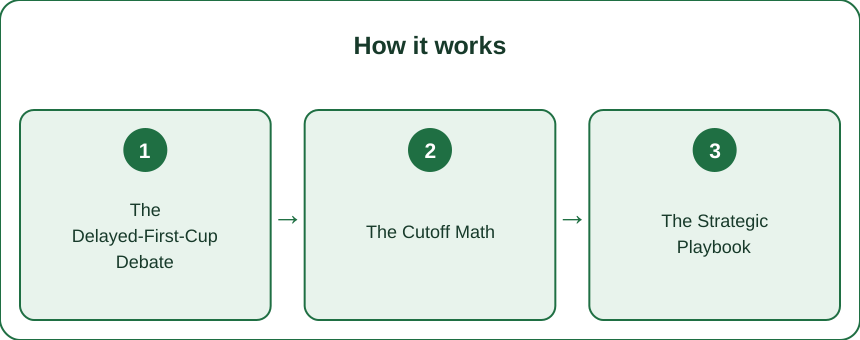
The Delayed-First-Cup Debate
The 90-minute theory, examined: the claim (waking cortisol is high, so caffeine is ‘wasted’ and delaying prevents the afternoon crash) versus the evidence (direct research is thin — the theory is plausible mechanism, not proven protocol; the trials testing it are sparse and unimpressive), the honest verdict (if delaying feels better for you, great — but drinking coffee upon waking is not a mistake requiring correction; the morning-light-first, coffee-whenever pattern captures most of the claimed benefit anyway), and the real morning rule (coffee ON TOP of morning light and water beats coffee instead of them — the sequence matters more than the delay).
The Cutoff Math
The afternoon line that matters: caffeine’s half-life runs 5-6 hours (the 3pm cup is half-active at 9pm and a quarter-active at 2am — the math nobody does at the espresso machine), the sleep-science finding (caffeine within 6-ish hours of bed measurably degrades sleep — including the sleep you don’t notice losing; the ‘coffee doesn’t affect me’ crowd often shows disrupted deep sleep on monitoring anyway), the personal-variation honesty (metabolizer genetics are real — the cutoff ranges from noon to 4pm by person; your 3am wide-awake data is your genotype speaking), and the practical rule (count back 8 hours from bedtime and draw the line — the 10pm sleeper’s last cup is 2pm).

The Strategic Playbook
Caffeine as a tool: the pre-workout deployment (coffee 30-45 minutes before training is the most evidence-backed performance supplement in existence — the fuel-timing world’s favorite legal enhancer), the coffee-nap trick (caffeine then an immediate 20-minute nap — both alarms fire together; the afternoon-slump nuclear option), the meeting-and-deadline dosing (smaller doses more often beat the giant mug — the steady-state approach that avoids the spike-crash), and the tolerance honesty (daily heavy use flattens the effect — the occasional strategic reset week returns coffee’s magic; the habitual triple-shot is mostly treating its own withdrawal).
The Bigger Cup Picture
The context notes: coffee’s health file is genuinely positive (the long-term research associates moderate coffee drinking with a list of good outcomes — the beverage needs no guilt), the sleep-versus-coffee hierarchy (when coffee is propping up chronic bad sleep, the coffee isn’t the problem or the solution — the circadian files are; caffeine is a loan against tonight, and the interest compounds), the pregnancy-and-condition amendments (the standard reduced-caffeine guidance applies — doctor conversations govern), and the enjoyment clause (half of coffee’s value is the ritual — the warm cup, the morning pause; the timing rules serve the pleasure, not the reverse). Drink it well-timed, and the cup pays twice.
Delay optional, cutoff mandatory, pre-workout is the power move, count back eight hours. Coffee timing is mostly one rule about the afternoon — the morning was always fine.
Keep Reading
This article is for general informational purposes only and is not medical advice. Always consult a qualified health professional for guidance specific to you.