Five Iced Coffee Methods Worth Knowing Before Summer Ends
Quick Answer: Cold brew is smooth and low-acid but takes 12 to 24 hours and loses the bright aromatic notes. Japanese iced coffee - brewing hot directly onto ice - takes three minutes and preserves far more aroma, which makes it the better method for good beans. Which one is right depends on your beans and your patience, and the five below cover every combination.
There are about three weeks of iced coffee weather left. Worth using them properly.

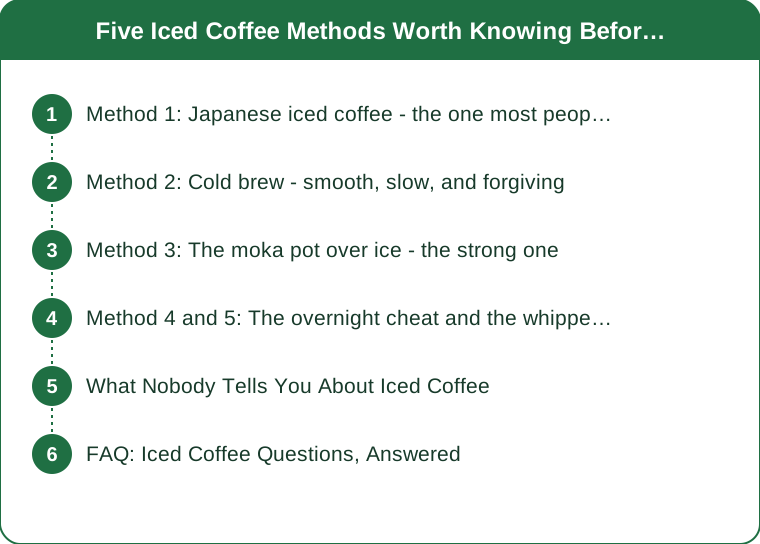
Method 1: Japanese iced coffee - the one most people have not tried
Brew hot, directly onto ice, using ice as part of your total water. It is the method most specialty cafes use and it takes as long as a normal pour-over.
How it works: you reduce the brewing water by roughly the weight of the ice, and brew straight into a vessel containing that ice. The coffee is flash-chilled the instant it is extracted.
A workable starting ratio: for one serving, use about 20g coffee, 150g hot water for brewing, and 150g ice in the carafe. Adjust to taste - the important part is that ice plus brew water equals your normal total.
Why it is better than pouring hot coffee over ice later: aromatic compounds are volatile and escape as coffee cools slowly. Flash chilling traps them. Coffee left to cool and then refrigerated loses a substantial amount of what made it interesting - and it also oxidises, which flattens the flavour further.
What it tastes like: bright, aromatic, acidic in the good sense. This is the method for beans you like - light roasts, fruity single origins, anything with distinctive character.
Time: about 3 minutes. No planning required, which is the whole appeal.
Method 2: Cold brew - smooth, slow, and forgiving
Steep coarse grounds in cold water for 12 to 24 hours, then filter. The most popular home method for good reasons and with real trade-offs.
A standard starting ratio is about 1:8 coffee to water by weight for a concentrate, diluted 1:1 with water or milk when serving. 1:5 gives you a stronger concentrate; 1:15 gives you a ready-to-drink brew.
What cold extraction changes: cold water extracts less of the acidic and bitter compounds, producing a noticeably smoother, sweeter, less acidic cup. Reported acidity is meaningfully lower than hot-brewed coffee, which matters if acidity bothers your stomach.
What you lose: the aromatic top notes. Cold brew flattens the distinctive character of interesting beans, which is why it works well with chocolatey, nutty medium and dark roasts and somewhat wastes a delicate light-roast single origin.
Practical points: grind coarse - fine grounds make it muddy and hard to filter. Steep at room temperature for a stronger, faster extraction, or in the fridge for a cleaner and slower one. Filter through a paper filter for clarity or a mesh for body.
Keeps 7 to 10 days refrigerated as a concentrate, which is the actual reason most people make it. Make it Sunday, drink it all week.
Method 3: The moka pot over ice - the strong one
A moka pot produces a concentrated, syrupy coffee that stands up to dilution better than drip does. For anyone who finds iced coffee watery, this is the fix.
Brew as normal, then pour immediately over a full glass of ice. Because the output is concentrated, the melting ice dilutes it to roughly normal strength rather than turning it into brown water.
The technique detail that matters: start with hot water in the base chamber. It reduces the time the grounds spend heating and produces noticeably less bitterness. Take it off the heat when it starts to sputter, not when it stops.
Best with: medium and dark roasts, and it is the natural base for an iced latte at home. Two parts moka coffee, one part milk, over ice is close to a cafe iced latte for the price of the beans.
Time: about 5 minutes, and it needs no special equipment beyond the pot.
The same logic applies to espresso if you have a machine - pull a double, pour over ice, add milk or water. Concentration is what makes iced coffee survive ice.

Method 4 and 5: The overnight cheat and the whipped one
Method 4 - Overnight fridge brew in a French press. The lowest-effort version of cold brew. Coarse grounds and cold water into the press, lid on, into the fridge overnight, plunge in the morning. No separate filtering, no equipment you do not already have.
Roughly 1:10 coffee to water for a ready-to-drink strength. It is slightly less clean than a paper-filtered cold brew and it takes about ninety seconds of actual work.
One warning: do not leave grounds sitting in the press for more than about 24 hours - it turns bitter and muddy.
Method 5 - Whipped coffee, for when there is only instant. Equal parts instant coffee, sugar, and hot water, whisked for a few minutes until it goes pale and thick, then spooned over iced milk.
Why it works with instant specifically: instant coffee foams because it is already soluble and contains the compounds that stabilise foam, which is why ground coffee will not do this. It is genuinely the best possible use of instant coffee, and it is a legitimately good drink rather than a compromise.
Time: about 4 minutes of whisking, or 90 seconds with an electric whisk.
### Which method for which situation
Good beans, no planning: Japanese iced coffee. A week of coffee at once: cold brew. Want it strong: moka pot. Minimum effort: overnight French press. Only instant available: whipped.
The one universal rule across all five: use more ice than feels sensible. A half-filled glass melts fast and dilutes as it goes. A full glass of ice melts more slowly and keeps the drink cold and consistent to the bottom.
What Nobody Tells You About Iced Coffee
Ice made from tap water changes the taste noticeably, particularly if your water is heavily chlorinated. Ice made from filtered water is a free upgrade and it is the single most overlooked variable in home iced coffee.
Coffee ice cubes solve dilution entirely. Freeze leftover coffee in a tray and use those cubes. The drink gets stronger as it melts instead of weaker, which is the correct direction.
Cold suppresses sweetness perception, which is why iced coffee often tastes less sweet than the same coffee hot. This is also why cafes use sugar syrup rather than granulated - sugar does not dissolve well in cold liquid, so it sits at the bottom. Make a simple syrup once and keep it in the fridge, or use a small amount of hot water to dissolve sugar before adding ice.
Milk behaves differently cold. Whole milk holds up better against dilution than skim, and oat milk is generally the best-behaved plant milk in iced coffee because of its body.
Cold brew is not necessarily lower in caffeine. The long steep time and high coffee-to-water ratio mean concentrate is frequently higher in caffeine than drip coffee, even though it tastes gentler. The smoothness is about acidity, not strength - worth knowing if you are drinking it in the afternoon and wondering why you cannot sleep.
And caffeine timing matters more than people account for: with a half-life commonly cited around 5 to 6 hours, an afternoon iced coffee is still meaningfully present at bedtime.
FAQ: Iced Coffee Questions, Answered
Is cold brew less acidic?
Measurably yes - cold extraction pulls fewer acidic compounds. If acidity bothers your stomach, cold brew is the method most likely to agree with you.
Why does my iced coffee taste weak?
Almost always because it was brewed at normal strength and then diluted by ice. Either brew stronger, reduce the water to account for the ice, or use coffee ice cubes.
How long does cold brew keep?
As a concentrate, 7 to 10 days refrigerated. Diluted or with milk added, treat it like any perishable drink and use within a couple of days.
What grind size for cold brew?
Coarse - similar to French press. Finer grinds over-extract during the long steep and make filtering difficult and messy.
Which method is best for expensive single-origin beans?
Japanese iced coffee. It preserves the aromatic compounds that you paid for, which cold brew largely flattens.
TL;DR:
- Japanese iced coffee - brewing hot onto ice - takes three minutes and keeps the aroma cold brew loses
- Cold brew is smoother and lower in acid, takes 12 to 24 hours, and suits chocolatey medium and dark roasts
- Moka pot over ice is the strong option; overnight French press is the lazy one; whipped is for instant
- Use a full glass of ice, filtered-water ice, and coffee ice cubes if you can plan ahead
- Cold brew is often higher in caffeine than it tastes - the smoothness is about acidity, not strength
Three weeks of iced coffee weather left. Use them on the good beans.
Keep Reading
This article is for general informational purposes only and is not medical advice. Always consult a qualified health professional for guidance specific to you.