Five Ways to Brew as the Weather Cools - and What Each One Is Best At
Quick Answer: The five methods worth knowing are pour-over, French press, AeroPress, moka pot and cold brew - and they differ mainly in filtration and contact time. Paper filters produce a clean, bright cup; metal or mesh filters keep oils and produce body. As the weather cools, the shift most people want is from cold brew’s low acidity toward a hotter method with more aromatic complexity.
The end of iced coffee season is a good moment to reconsider what you are actually brewing with, because each of these does something the others cannot.

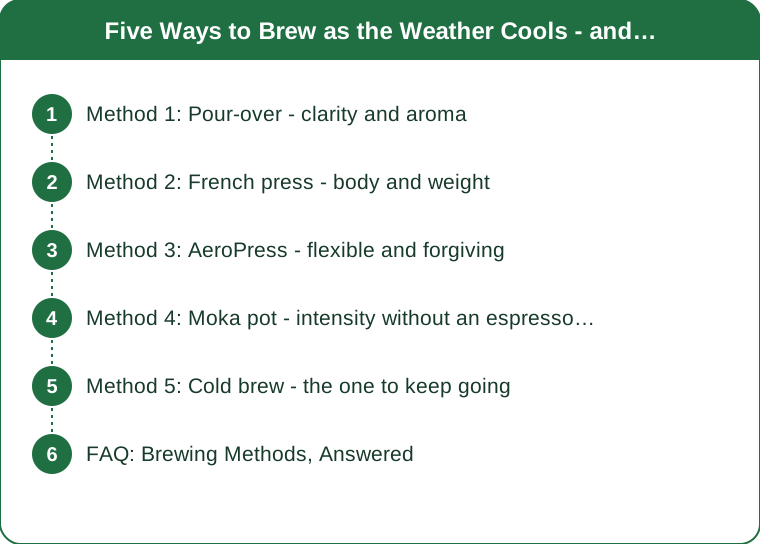
Method 1: Pour-over - clarity and aroma
What it is: hot water poured over ground coffee in a paper filter, usually taking two and a half to four minutes.
What it does to the cup. The paper filter removes most oils and fine particles, producing a cup that is clean, bright and aromatically detailed. Distinct flavours - citrus, florals, fruit - come through more clearly than in any other method.
Why it suits a cool morning: the aroma is the point, and aroma is far more perceptible from a hot cup. A pour-over at 8am in September delivers something a cold brew fundamentally cannot.
What it asks of you:
- A medium grind, roughly like table salt
- A ratio around 1:16 - 60 grams of coffee per litre of water
- Water just off the boil, roughly 92 to 96 degrees
- Attention for three minutes, which is either meditative or annoying depending on the day
Where it goes wrong: an uneven pour produces uneven extraction, which tastes thin and sour. Pouring in slow concentric circles rather than dumping water in the middle is most of the technique. If the brew finishes in under two minutes, grind finer; over four and a half, grind coarser.
Best for: single-origin beans where you want to taste the specific character, and anyone who enjoys the ritual.
Method 2: French press - body and weight
What it is: coarse grounds steeped in hot water for around four minutes, then separated by a metal mesh plunger.
What it does to the cup. The metal filter lets oils and fine particles through, producing a heavy, rounded, textured cup with much more body than a pour-over. Individual flavour notes are less distinct; the overall impression is richer.
Why it suits cooler weather: the weight and warmth of a French press cup is genuinely comforting in a way a clean brew is not. It also holds heat better in the pot, which matters when the kitchen is cold.
What it asks of you:
- A coarse grind, like rough sea salt. This is the most common mistake - too fine produces sludge and bitterness.
- A ratio around 1:15
- Four minutes of steeping, then plunge slowly
- Decant immediately. Coffee left on the grounds keeps extracting and turns bitter within minutes.
Where it goes wrong: grinding too fine, plunging too hard, and leaving it in the pot. All three are easy to fix and all three are extremely common.
Best for: darker roasts, mornings where you want volume without attention, and anyone who finds pour-over too thin.
Method 3: AeroPress - flexible and forgiving
What it is: coffee steeped briefly in a chamber then pushed through a paper or metal filter by hand pressure. Takes about 90 seconds.
What it does to the cup. With the standard paper filter, it produces something between a pour-over and an espresso - clean, concentrated, low in bitterness. The short contact time and pressure extract efficiently without over-extracting.
Why it is worth owning: it is the most forgiving method here. Grind size, water temperature and timing all have wide tolerances, which means it produces a decent cup under conditions that would ruin a pour-over.
What it asks of you:
- A medium-fine grind
- A ratio anywhere from 1:12 to 1:16, depending on whether you want concentrate or a full cup
- Water around 80 to 90 degrees, cooler than pour-over, which reduces bitterness
- About two minutes total
Where it goes wrong: rarely, which is the point. Pressing too hard and too fast is the main error and produces a slightly harsh cup.
Best for: travel, small kitchens, one-cup brewing, and anyone who wants good coffee without a ritual. It is also the easiest method to make a hot concentrate with, which then works with hot or cold milk depending on the day.

Method 4: Moka pot - intensity without an espresso machine
What it is: water in a lower chamber heated until steam pressure pushes it up through grounds into an upper chamber. Takes about five minutes on the hob.
What it does to the cup. Produces a strong, concentrated, low-acid cup with real intensity - not technically espresso, but the closest thing without a pump machine. Body is substantial and the flavour is bold rather than delicate.
Why it suits autumn: it makes the base for a proper milk drink at home. A moka pot plus warm milk is the most economical route to something resembling a flat white, which is what most people actually want as it gets colder.
What it asks of you:
- A fine grind, though not as fine as espresso
- Pre-heated water in the base, which prevents the metal overheating the grounds and producing that scorched taste
- Medium heat, not high
- Remove from heat when it starts to gurgle, not after
Where it goes wrong: high heat and cold starting water, which together produce the bitter metallic flavour moka pots are unfairly known for. Pre-heated water and moderate heat fixes almost all of it.
Best for: milk drinks, strong coffee, and anyone who grew up with one on the stove.
Method 5: Cold brew - the one to keep going
What it is: coarse grounds steeped in cold water for 12 to 24 hours, then filtered.
What it does to the cup. Low temperature extracts fewer of the compounds associated with bitterness and perceived acidity, producing a smooth, sweet, low-acid concentrate that is noticeably different from chilled hot coffee.
Why it still earns space in autumn: the concentrate keeps for a week or more in the fridge, and it can be diluted with hot water or hot milk for a fast morning cup. Most people abandon cold brew in September without realising it works hot.
What it asks of you:
- A very coarse grind
- A ratio around 1:8 for concentrate, then dilute to taste
- 12 to 24 hours at room temperature or in the fridge
- Planning ahead, which is the only real cost
Where it goes wrong: over-steeping past about 24 hours produces a woody, flat flavour. Under-filtering leaves sediment, which is easily solved with a second pass through a paper filter.
Best for: batch preparation, low-acid preference, and anyone who wants coffee ready without any morning effort.
How to choose between all five, briefly: if you want to taste the bean, pour-over. If you want body, French press. If you want reliability, AeroPress. If you want a milk drink, moka pot. If you want it ready in advance, cold brew.
FAQ: Brewing Methods, Answered
Which method makes the strongest coffee?
Moka pot and AeroPress concentrate produce the highest concentration per volume. Strength is a ratio question more than a method question - any method gets stronger with more coffee per unit of water.
Why does my French press taste bitter?
Usually a grind that is too fine, or leaving the coffee sitting on the grounds after plunging. Decant immediately and grind coarser.
Does water temperature really matter?
Yes. Too hot extracts bitter compounds, too cool under-extracts and tastes sour. Just off the boil - around 92 to 96 degrees - suits most hot methods, and the AeroPress works well cooler.
Can I use cold brew concentrate hot?
Yes, and it is the most underused thing about it. Dilute with hot water or hot milk. It will taste smoother and less aromatic than a hot-brewed cup, which some people prefer.
What is the single biggest upgrade to home coffee?
A burr grinder and grinding immediately before brewing. It makes a larger difference than changing brewing method, and pre-ground coffee loses aromatic compounds within days.
TL;DR:
- Paper filters give clarity and aroma; metal and mesh filters give body and texture
- Pour-over for tasting the bean, French press for weight, AeroPress for reliability
- Moka pot is the cheapest route to a proper milk drink at home - use pre-heated water
- Cold brew concentrate works hot, which is why it does not need retiring in September
- Grinding fresh matters more than which method you choose
As the mornings cool, the shift most people want is toward aroma, which means hot water and a paper filter. Keep the cold brew concentrate in the fridge anyway - it dilutes with hot milk perfectly well.
Keep Reading
This article is for general informational purposes only and is not medical advice. Always consult a qualified health professional for guidance specific to you.